

Introduction
When we talk about bra size, we’re referring to the combination of band measurement (the number, like 34 or 36) and cup volume (the letter, like B or DD). At Paradise Clothes, we understand that finding the right fit goes far beyond aesthetics—it directly impacts your physical wellbeing. The relationship between bra size and back pain is more significant than many realize, with poorly fitted support garments contributing to chronic discomfort, altered spinal biomechanics, and postural compensations that can affect your quality of life.
Understanding breast size and posture connections empowers you to make informed choices about the undergarments you wear daily. Whether you’re experiencing discomfort or simply want to prevent future issues, recognizing how bra fit and back pain intersect is the first step toward better support and comfort.
How Bra Size Can Affect Biomechanics and Posture
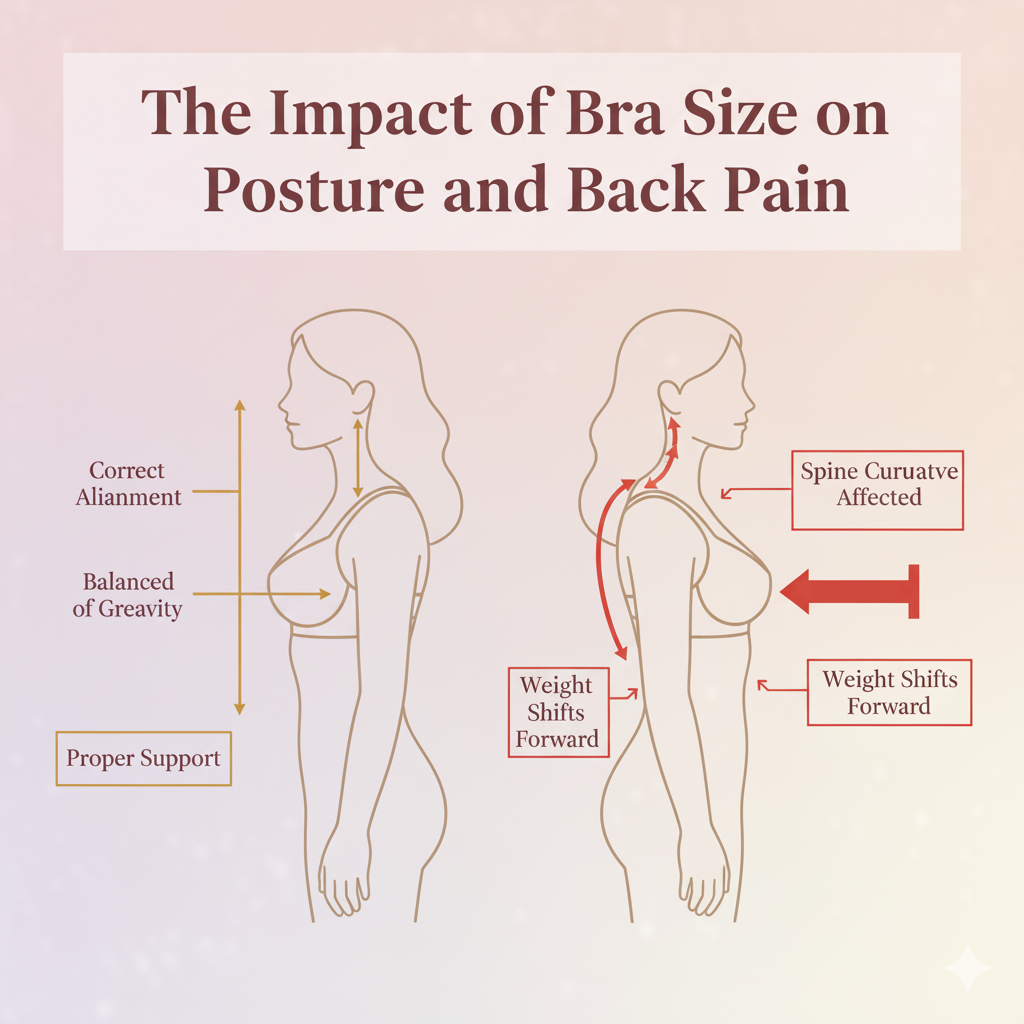
The human spine naturally curves, but the weight of breast tissue can significantly alter these curves and shift your body’s center of gravity forward. When breast weight and spine interaction isn’t properly managed through adequate support, your body compensates in ways that strain postural muscles.
Large breasts back pain occurs partly because additional breast mass pulls the shoulders forward and down, creating excessive load distribution across the upper back. This forward pull encourages thoracic kyphosis—an exaggerated rounding of the upper spine—which forces the trapezius, rhomboids, and other postural muscles to work overtime just to maintain upright posture.
The breast mass and center of gravity relationship means that women with larger cup sizes often unconsciously lean forward or round their shoulders to balance the weight. This altered alignment affects rib cage alignment, compresses the chest cavity, and can even impact breathing mechanics. Over time, these compensations become habitual, leading to musculoskeletal strain that extends from the neck down through the lower back.
Even women with smaller breasts aren’t immune—improper bra fitting back pain can occur at any size when the support garment fails to distribute weight properly or creates pressure points that alter natural movement patterns.
Evidence from Research and Clinical Findings
Clinical research has established clear connections between breast volume and postural changes. Studies examining women with macromastia—the medical term for excessively large breasts—consistently demonstrate higher rates of thoracic spine pain and postural deviations compared to women with smaller breast sizes.
Research published in ergonomics and orthopedic journals shows that cup size and spinal posture correlations are measurable and significant. Women wearing D cups or larger show statistically greater forward head posture and increased upper back curvature. One study found that breast weight exceeding 500 grams per breast correlates with measurable increases in spinal angle deviation.
The kyphosis and breast size relationship has been documented through postural assessment tools, with larger-breasted women displaying 10-15 degree increases in thoracic curve angles. This isn’t merely cosmetic—it translates to real mechanical disadvantage for the supporting musculature.
Furthermore, follow-up studies on women who underwent reduction mammaplasty (surgical breast reduction) provide compelling evidence. These patients report significant improvements in posture, reduced pain scores, and decreased reliance on pain medication. The reduction mammaplasty back pain relief documented in these studies suggests that breast volume itself—not just poor support—contributes meaningfully to postural dysfunction when volume exceeds what the body can comfortably support.
Common Symptoms Associated with Improper Support or Large/Small Sizes
Recognizing the signs your bra is causing back pain helps you address problems before they become chronic. Common symptoms include:
Upper back and shoulder pain: The most frequent complaint manifests as aching or burning between the shoulder blades, often worsening throughout the day. This connective tissue strain results from muscles working constantly to counteract forward pull.
Neck pain and headaches: Forward head posture—a compensation for breast weight—strains the cervical spine and can trigger tension headaches. Many women don’t realize their chronic headaches stem from bra size neck pain connections.
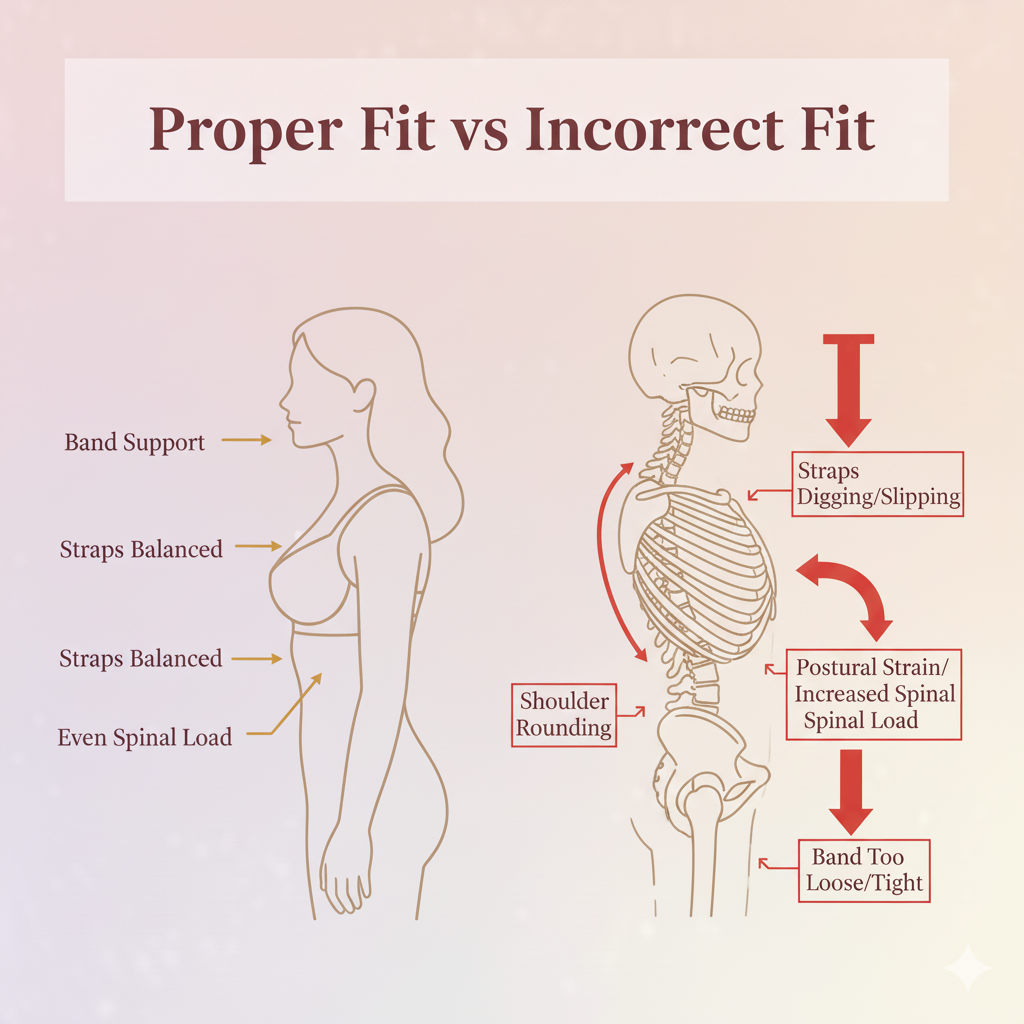
Shoulder grooves: Deep indentations where bra straps sit indicate excessive pressure. This bra strap pressure suggests the straps are bearing too much weight, which should instead be supported by the band. Shoulder grooving can damage underlying tissue and nerves over time.
Breast ptosis discomfort: Without adequate support, breast ptosis (sagging) increases, which further alters the weight distribution and exacerbates postural strain.
Upper cross syndrome: This specific pattern combines tight chest and neck muscles with weak upper back muscles, creating rounded shoulders and forward head position—a textbook example of postural compensation.
Numbness or tingling: Compressed nerves from tight straps or bands can cause arm or hand numbness, particularly problematic with bra strap pain neck shoulders patterns.
Even those seeking bra for small chest posture improvement may experience issues. Inadequate support allows excessive movement during activity, while overly tight bands can restrict breathing and create their own postural compensations.
Role of Bra Fit vs. Cup Volume — Myths and Realities
A critical distinction exists between having large breasts and wearing an improperly fitted bra—yet does bra size cause back pain as a standalone factor? The reality is nuanced.
Breast volume (your actual cup size) creates the physical load your body must support. Bra fit, however, determines how effectively that load is distributed. Many women asking does cup size affect my posture discover their symptoms stem not from size alone but from years of wearing incorrectly fitted breast support garments.
The band fit carries 80-90% of support responsibility. A band riding up your back indicates it’s too loose, forcing straps to compensate—leading to those painful shoulder grooves. Conversely, an overly tight band restricts breathing and can create its own discomfort.
Cup measurement matters equally. Bra cup overflow (sometimes called “quadboob”) occurs when cups are too small, pushing breast tissue upward and outward in ways that worsen posture. Too-large cups fail to encapsulate tissue properly, allowing excessive movement and inadequate support.
Common myths include:
- “I’m a 36C everywhere”—sizing varies dramatically between manufacturers
- “Underwire always causes pain”—properly fitted underwire actually improves support
- “Bigger breasts always cause back pain”—proper support can mitigate most size-related issues
The truth? Bra support and posture optimization requires both appropriate size AND proper fit. A well-fitted 34G can provide better postural support than a poorly fitted 36C, despite the size difference.
How to Assess Fit and Measure Correctly (Step-by-Step)
Knowing how to tell if bra causes back pain starts with understanding proper fit. Follow these bra fitting tips for posture to measure accurately:
Step 1: Measure your band size Wearing an unpadded bra, measure snugly around your ribcage directly under your breasts. Round to the nearest whole number. If even, add 4 inches; if odd, add 5 inches. This gives your band size.
Step 2: Measure cup size Measure loosely around the fullest part of your bust. Subtract your band measurement from this number. Each inch of difference equals one cup size (1″=A, 2″=B, 3″=C, etc.).
Step 3: Assess fit indicators
Check these signs of proper fit:
- Band sits level around your body, not riding up
- You can fit two fingers under the band comfortably
- Straps stay in place without slipping or digging
- Cups fully contain breast tissue without gaps or overflow
- Center gore (between cups) lies flat against your sternum
- How bra band affects posture: the band should feel snug on the loosest hook when new
Step 4: Recognize common mistakes
Many women wear bands too large and cups too small. If you’ve been wearing a 36B and experience pain, try a 34C or 32D—same cup volume, better support.
When to remeasure: Weight changes of 10+ pounds, pregnancy, hormonal shifts, or if you’re asking how often should I replace bras for support (every 6-8 months with regular wear).
For bra fitting for heavy breasts, consider visiting a bra fitting specialist who can assess your unique needs. Search for bra fitting near me for large breasts to find experienced fitters.
Bra Types and Supportive Features That Reduce Strain
Different activities and body types benefit from specific bras for posture designs. Understanding bra features that reduce spinal strain helps you build a functional wardrobe:
Full-coverage/full-cup bras: Encapsulate breast tissue completely, providing maximum support for larger sizes. Look for wide straps (1″+ width) to distribute weight without shoulder grooves from bra straps.
Minimizer bras: Redistribute breast tissue to create a slimmer profile while maintaining support—helpful for both posture and clothing fit.
Sports bras: Essential for physical activity, sports bra posture benefits include compression or encapsulation that minimizes movement. High-impact designs reduce bounce that stresses supporting muscles. The sports bra impact on posture during exercise prevents the compensatory movements that reinforce poor posture patterns.
Wide-band support bras: Bands measuring 2-3 inches wide distribute pressure across more surface area, essential for bra band stability and best bras for back support.
Supportive underwire vs wireless: Quality supportive underwire provides structure that lifts and supports, taking strain off shoulders. However, wireless bras for upper back pain work well when properly constructed with firm bands and strategic seaming. Neither is universally superior—fit matters most.
Front-closure bras: Front-closure bras for posture benefit those with limited shoulder mobility, making proper positioning easier without twisting.
Adjustable features: Multiple hook positions and adjustable straps let you customize fit as the bra stretches or your body changes.
For those seeking cheap bras that prevent back pain, focus on construction quality over price alone. A well-made $40 bra outlasts and outperforms three $15 poorly constructed ones, making it the better investment for your spine.
Non-Bra Interventions and Self-Care
While proper support is foundational, posture correction requires addressing the muscular and habitual components that develop over time. These non-surgical solutions for macromastia pain complement appropriate bra selection:
Posture exercises: Specific movements counteract forward-rounded positions:
- Scapular retraction: Squeeze shoulder blades together, hold 5 seconds, repeat 10 times
- Postural exercises like rows strengthen rhomboids and middle trapezius
- Scapular squeezes: Pull shoulders back and down, away from ears
- Doorway chest stretches open tight pectoral muscles
Strengthening programs: Target postural muscles through resistance training. Strengthening the upper back helps counterbalance breast weight naturally.
Ergonomic posture: Adjust workspace, sleeping position, and daily habits:
- Monitor at eye level prevents forward head posture
- Supportive pillows during sleep maintain spinal alignment
- Regular position changes prevent muscle fatigue
Postural education: Understanding proper alignment—ears over shoulders, shoulders over hips—helps you self-correct throughout the day. Many people benefit from posture assessment by a physical therapist.
Weight management: When appropriate, modest weight loss can reduce breast volume and associated symptoms.
Physical therapy: Professional guidance provides pain management strategies tailored to your specific patterns. Therapists address not just symptoms but underlying biomechanical issues.
These conservative management approaches work best alongside proper bra support. Think of exercises for posture caused by large breasts as strengthening your body’s natural support system while the bra provides external assistance.
When to Consider Medical Options
Most women find relief through proper fitting and conservative management, but some situations warrant medical consultation. Consider professional evaluation if:
- Pain persists despite 3+ months of proper support and exercises
- Symptoms significantly limit daily activities or quality of life
- You experience numbness, tingling, or weakness
- Macromastia back pain severely impacts sleep or work
Reduction mammaplasty surgically removes breast tissue, reducing volume and weight. This procedure provides dramatic relief for appropriate candidates, with studies showing 80-95% patient satisfaction regarding posture correction after breast reduction.
Referral criteria typically include:
- Cup size DD or larger with documented symptoms
- Evidence of conservative treatment attempts
- Realistic expectations about outcomes
- Overall good health for surgery
Your primary care physician or gynecologist can provide referrals to plastic surgeons specializing in reduction mammaplasty back pain treatment. Many insurance companies cover the procedure when medical necessity is documented.
Alternative medical interventions include:
- Prescription physical therapy
- Pain management specialists
- Chiropractic care focused on postural alignment
- Orthotic devices for additional support
Remember that bra adjustments to reduce back pain and lifestyle modifications should be attempted before pursuing surgical options, as they successfully resolve symptoms for many women.
Practical Prevention Checklist (Quick Tips)
Use these bra shopping tips for back pain sufferers to maintain optimal support:
Daily fit checks:
- ☑ Band level around ribcage
- ☑ Straps adjusted to prevent slipping or digging
- ☑ No bra cup overflow or gaping
- ☑ Center gore flat against chest
Maintenance schedule:
- ☑ Replace bras every 6-8 months with regular wear
- ☑ Rotate between 3-4 bras to extend lifespan
- ☑ Hand wash or use lingerie bags to preserve elasticity
- ☑ Remeasure every year or after body changes
Activity-appropriate support:
- ☑ High-impact sports bra for running/jumping
- ☑ Everyday support bra for work/casual wear
- ☑ Sleep bra if desired for nighttime comfort
Professional resources:
- ☑ Annual fitting with bra fitting specialist
- ☑ Physical therapy evaluation if pain develops
- ☑ Medical consultation for persistent symptoms
Best bra for posture after pregnancy: Expect significant size changes during and after pregnancy; get fitted at each stage for appropriate support as your body changes.
How to measure if breasts cause back pain: Track pain levels before and after switching to properly fitted bras for 4-6 weeks to assess improvement.
FAQs
Can bra size cause back pain? Yes—larger breast volume creates additional load on your spine and postural muscles, potentially causing discomfort. However, proper bra fit can significantly reduce or eliminate size-related back pain by optimizing weight distribution.
How often should I get fitted? Get professionally fitted annually, after 10+ pound weight changes, following pregnancy, or whenever you experience discomfort. Bodies change, and so do bra sizes.
Do sports bras help posture? Absolutely. Sports bra posture benefits include reduced breast movement during activity, which prevents the compensatory movements that reinforce poor posture. Choose activity-appropriate support levels.
Can bras cause upper back pain? Yes—can bras cause upper back pain when poorly fitted. Bands that are too loose force straps to bear weight, creating upper back and shoulder strain. Too-tight bands restrict breathing and create their own discomfort.
What are the best bras for back support? Look for wide bands (2-3 inches), full cups, wider straps (1″+ width), and either quality underwire or firm wireless construction. Proper fit matters more than brand or style.
How do I fix shoulder grooves from bra straps? Shoulder grooves from bra straps fix: This indicates your band is too loose, forcing straps to carry weight. Try a smaller band size and ensure the band provides 80%+ of support. Wider straps also help distribute pressure.
Are there good bra options for small chest posture improvement? Yes—even smaller sizes benefit from proper support during activity. Look for bras with structured cups that prevent excessive movement without creating unnecessary bulk.
Conclusion: Actionable Takeaways
The connection between bra size and posture is real, measurable, and manageable. Whether you’re dealing with large breasts back pain or simply want to prevent future issues, remember this: fit comes first, followed by appropriate support features, and finally medical intervention if conservative measures fail. Take time to measure correctly, invest in quality breast support garments that match your activity level, and don’t hesitate to seek professional help from a bra fitter or physical therapist. Your spine will thank you.
At Paradise Clothes, we’re committed to helping you find support that works with your body, not against it. By understanding how bra fit and back pain intersect, you’re empowered to make choices that support both comfort and long-term spinal health. Start with proper measurement, choose quality over quantity, and listen to your body—if something hurts, it’s time for a change.